UX Design — Case Study 01
IncluDesign
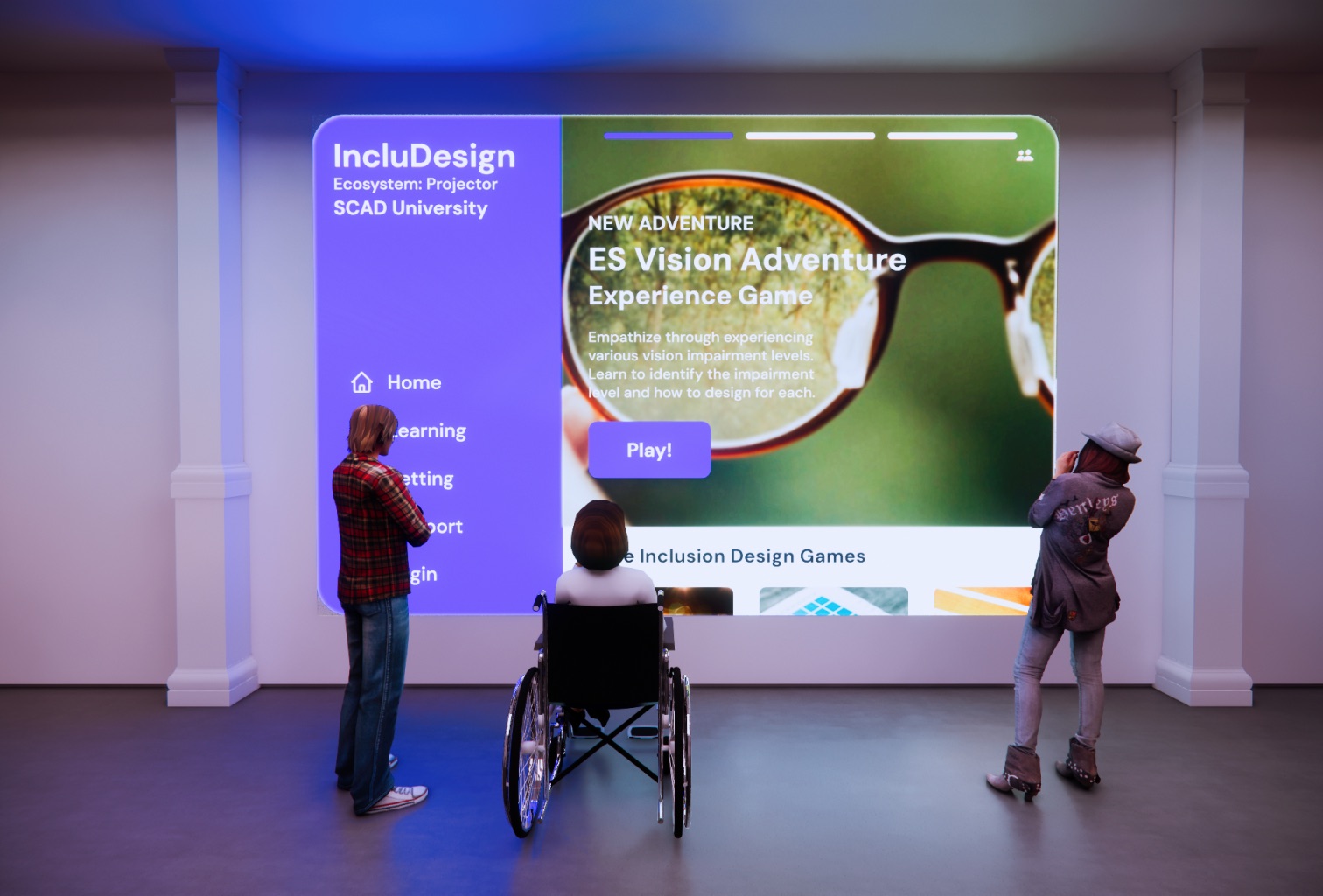
An immersive projector game that builds empathy for visual impairment — designed for Gen-Z design students.
A SCAD graduate studio brief: design an immersive environment product around accessible education. Gen-Z design students care about inclusion — but lack hands-on ways to practice it.
How might we help Gen-Z design students learn accessible design through immersive environment technology?
Secondary research, a student survey, and an interview with SCAD's Inclusion Director — framed through Microsoft's Inclusive Design framework.
"When I think of inclusion, I think of family — ensuring every member engages in the most purposeful way."
— Director Walker, SCAD Inclusion DirectorWe pivoted from a web app with AR scanner to an interactive projector game — user feedback demanded a more immersive, shared experience. The web app became a controller and accessibility layer.
I owned the login sequence, spinner mechanic, and simulation quiz. Teammates built the design system and remaining screens.
Presented to SCAD students and faculty. Feedback was positive on engagement — two gaps flagged: clearer ecosystem explanation, more scenario diversity.
- Add immersive video and spatial audio.
- Expand to more visual impairments and scenarios.
- Test with diverse users across the accessibility spectrum.
- Source a physical projector for real-world playtesting.
Completed in three weeks. Well-received by peers and faculty as a novel approach to inclusive design education.